10 + 1 Things to Know When Operating Filter Presses
Episode 3 – Choosing Auxiliary Equipment
Welcome back to the third installment of our technical series, “10 + 1 Things to Know When Operating Filter Presses”. A dedicated space for in-depth analysis focused on sharing operational experiences and best practices to optimize the design and management of filtration systems.
Today’s Focus: Why is the correct selection of auxiliary equipment important?
For a solid-liquid separation system to operate efficiently and reliably, simply choosing a good filter press is not enough: the entire process must be carefully considered.
First, it is necessary to precisely define the filtration parameters and expected performance through accurate laboratory or pilot plant testing, in order to characterize the product’s behavior and identify optimal operating conditions.
Once the filter press specifications have been determined, it becomes essential to correctly size and select all auxiliary equipment, which plays a decisive role in the reliability and effectiveness of the process.
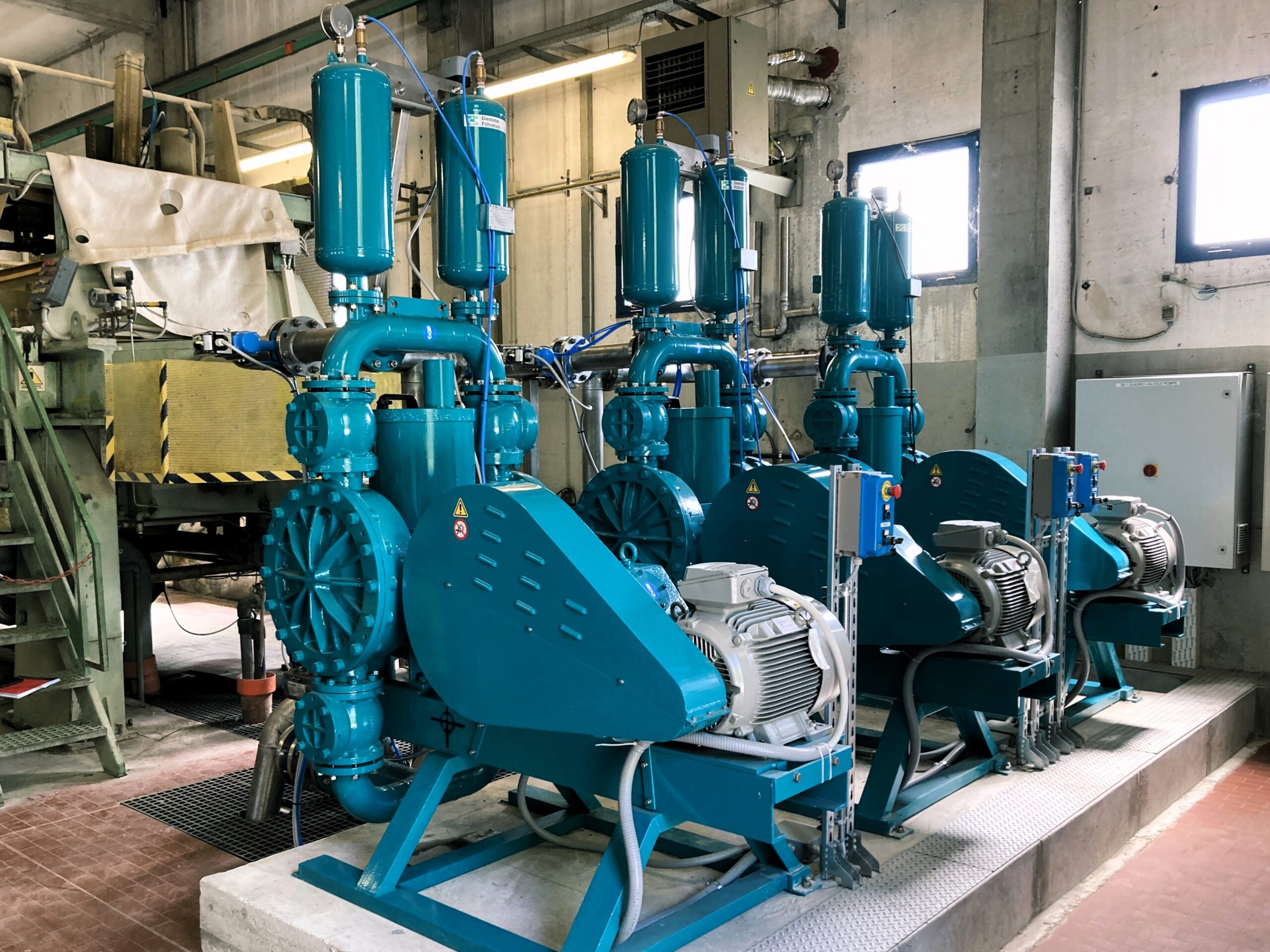
The feed pump: the heart of the system
Among the auxiliary equipment, the feed pump is certainly one of the most important.
In fact, it is the pump that generates the pressure required for the filtration process: the filter press does not “create” pressure, but manages and maintains it by clamping the plate pack.
The pump must be selected taking into account the nature of the sludge and the operating conditions:
- If the product contains coarse or abrasive solids, pumps made of wear-resistant materials should be chosen;
- If the product is chemically aggressive, corrosion-resistant components and linings will be necessary.
The choice does not always fall on a centrifugal pump: in many cases, the application may require piston, diaphragm, or screw pumps, or even the combination of multiple pump types, depending on the feeding and filtration stages.
During the cycle, in fact, the pump initially operates at maximum flow rate and low pressure, then gradually shifts to minimum flow rate and high pressure as the chambers fill and the resistance of the cake increases.
In the case of filters with membrane plates, the pump stops at a lower pressure, leaving it to the drying system (air or water) to complete the dehydration and increase the pressure.
Installation and Other Key Considerations
Selecting the right pump is not enough: positioning and installation are equally critical.
Incorrect positioning can in fact promote cavitation, resulting in pump damage and loss of efficiency.
Hydraulic shocks must be carefully considered, especially when the filter press is located at a level significantly higher than the floor where the pump and feed tank are situated.
Similar attention must also be paid to other auxiliary equipment, such as:
- compressors, used to operate the dewatering systems, for core blow discharge, or for cake blowing (topics we will explore in greater detail in one of our upcoming episodes);
- cake and cloth washing pumps, the selection of which influences the duration and quality of the filtration cycle.
A key principle to remember
The efficiency of a filter press system depends not only on its design but on the harmony of all the equipment that supports it: every component contributes to the success of the filtration process.