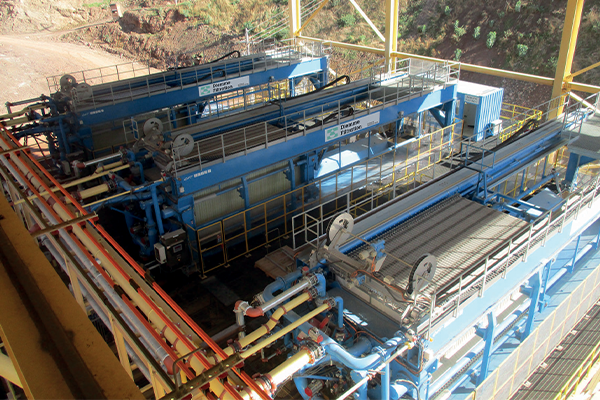
In any heavy industrial setting, particularly in mining, chemical processing, or large-scale manufacturing, operational safety is not merely a regulation to be met—it is the bedrock of productivity, reliability, and corporate responsibility. Within the domain of solid-liquid separation, the filter press stands as a powerful and essential piece of machinery. Operating under immense hydraulic pressures and involving the movement of heavy components, these systems demand a safety-first approach. A failure at any level can lead to significant downtime, equipment damage, and, most critically, severe risk to personnel.
This is where Diemme Filtration’s philosophy of “Attention to details” becomes paramount. A truly safe dewatering plant is the result of a holistic strategy that integrates robust mechanical engineering, intelligent automation, and stringent operational protocols. It is a commitment that goes beyond the boundaries of innovation to create an environment where efficiency and safety are not competing interests but complementary goals.
This guide details the critical plant safety features and operational best practices that define a modern, safe, and efficient automated filtration plant.
The Foundation of Safety: Robust Mechanical and Structural Design
The safety of a filter press begins with its physical construction. The immense forces involved in pressing slurries to dewater solids require a structure that can withstand cyclical stress over many years without failure.
Frame Integrity and Material Science
The frame is the backbone of the filter press. Its ability to manage and distribute massive closing forces is fundamental to safe operation.
- Advanced Engineering: At Diemme Filtration, all components are meticulously designed using advanced engineering software. This allows for finite element analysis (FEA) to model and minimize stresses, preventing deformation under load. The frame itself is fabricated from high-quality construction steels selected for their tensile strength and durability.
- Innovative “Total Traction” System: Unlike traditional push-to-close systems, high-capacity models like the Diemme Filtration GHT series utilize a “total traction” pull-to-close design. In this system, four hydraulic jacks pull the mobile header closed, placing the tie beams in tension. This innovative approach prevents the closing force from transmitting stress to the overhead beam, which only supports the weight of the plates, thereby eliminating the risk of structural deformation over time.
- Structural Redundancy: The GHT fixed header is engineered with a high-tensile steel “cellular” structure, specifically designed to resist stress. This conservative design ensures that the safety threshold of the material is far above the maximum stress experienced during operation.

Hydraulic Systems: The Power and Control
The hydraulic system generates the force necessary for filtration. Its safety and reliability are non-negotiable. The Diemme Filtration GHT 4×4, for example, uses four powerful hydraulic cylinders placed at the corners of the plate pack. This design offers two key safety advantages:
- Uniform Pressure Distribution: The four-cylinder configuration ensures that closing pressure is distributed uniformly across each plate. This prevents misalignment and ensures a perfect hermetic seal, avoiding high-pressure leaks of slurry or filtrate.
- Automatic Compensation: The jacks are equipped with an automatic control system that allows each one to adjust its length according to the exerted pressure, compensating for any minor misalignments in the plate pack and guaranteeing a perfect closure every time.
Automation and Control: The Brains of a Safe Operation
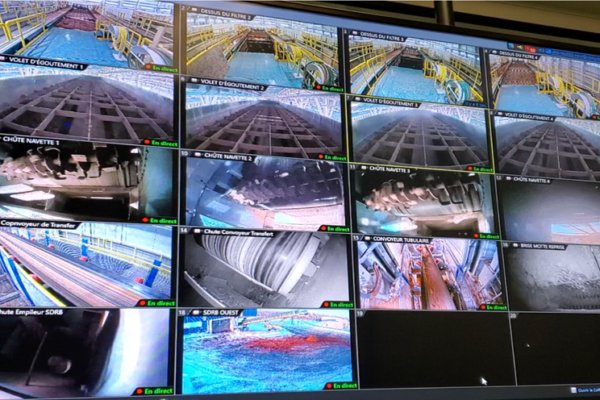
Modern automated filtration has revolutionized plant safety by minimizing the need for manual intervention during the filtration cycle. A sophisticated automation system acts as a vigilant overseer, ensuring every sequence is performed correctly and safely.
PLC, HMI, and Centralized Control
The Programmable Logic Controller (PLC) is the central nervous system of the filter press.
- Process Safeguarding: The PLC controls the entire filtration sequence, from closing the press and filling it with slurry to cake discharge. It monitors an array of sensors to ensure that each step is completed successfully before the next begins. This prevents dangerous situations, such as feeding slurry before the press is fully closed and locked.
- Intuitive Operator Interface: All Diemme Filtration automated presses are equipped with a sophisticated Human-Machine Interface (HMI). This touch-screen panel provides clear monitoring of the filter’s operation, simplifies fault diagnostics, and allows for the safe adjustment of filtration parameters to optimize the process.
Advanced Sensor Technology for Proactive Protection
A network of advanced sensors provides the PLC with real-time data, enabling it to detect and respond to potential hazards instantly.
- Laser Control Systems: High-performance machines like the GHT feature a laser control system that constantly verifies the plate pack alignment. If any anomaly is detected, it immediately stops the press, preventing potential damage to the plates or the frame. This is a prime example of
“Attention to details” in proactive safety design.
- Load Cells: To ensure complete and reliable cake discharge, load cells can be placed under the supporting feet of the press. These cells constantly monitor the machine’s weight, confirming that all cakes have been discharged before a new cycle can begin. This prevents the dangerous situation of attempting to close the press on a retained cake.
Protecting Personnel: Physical Guarding and Access Control
While automation minimizes interaction, robust physical guards are essential to protect personnel during operation and maintenance.
- Light Curtains: Diemme Filtration presses are equipped with state-of-the-art electronic interlock systems. The AUTOMAT model, for instance, utilizes photoelectric light curtains instead of cumbersome physical barriers. These curtains create an invisible safety field around the plate pack; if an operator breaks the beam, the machine’s movement is instantly halted. This system uniquely allows safe lateral access for inspection without stopping the machine, enhancing both safety and usability.
- Mechanical Guarding: All moving parts are effectively guarded. The plate-shifting mechanism on the GHT is located inside the upper beam, where it is protected from sludge and corrosive chemicals by a continuous rubber-lined cloth belt. Furthermore, protective bellows shield the hydraulic jack’s piston from dust and corrosive liquids, ensuring long-term reliability.
- Engineered for Safe Maintenance: Safety extends to maintenance activities. Large machines like the GHT5000F Domino are designed with integrated access ladders, platforms, and walkways with handrails, allowing technicians to perform routine tasks like cloth changes safely and efficiently.
Operational Best Practices for a Culture of Safety
The safest equipment in the world is only effective within a culture that prioritizes safe practices.
- Comprehensive Operator Training: Personnel must be thoroughly trained on the specific functions of their filter press, including the purpose of every safety feature, standard operating procedures, and emergency protocols.
- Routine Inspections: Daily walk-arounds to check for hydraulic leaks, ensure guards are in place, and verify sensor cleanliness are crucial. These should be supplemented by regular, in-depth inspections of structural components, hydraulic lines, and electrical systems as outlined by the manufacturer.
Oriented to the Future: The Next Generation of Filtration Safety
Diemme Filtration’s commitment to safety is oriented to the future. We are continuously integrating technologies that not only enhance performance but also elevate safety standards. The
AIDA IIoT platform is a key part of this vision. AIDA collects and processes real-time data from the filter press, enabling predictive maintenance alerts. By identifying a potential component failure before it occurs, AIDA helps prevent unsafe operating conditions and costly unplanned downtime, turning data into assertive, safety-focused decision-making.
Conclusion: Where Trust Never Ends
Filter press safety is a multifaceted discipline that begins with custom engineering and robust design, is executed by intelligent automation, and is sustained by a vigilant, well-trained operational team. By focusing on every detail, from the grade of steel used in the frame to the logic programmed into the PLC, Diemme Filtration builds equipment that empowers industries to achieve their production goals without compromising on safety.
Frequently Asked Questions (FAQ)
- What is the most critical safety feature on an automated filter press? While all safety features are important, a combination of robust physical guarding (like light curtains) and a well-programmed PLC with integrated sensor feedback (like plate alignment lasers and load cells) is the most critical system for protecting both personnel and the machine itself.
- How does automation improve filter press safety? Automation significantly improves safety by minimizing the need for operators to interact directly with the machine during its high-pressure cycle. It handles repetitive tasks like plate shifting and valve sequencing precisely, while a network of sensors constantly monitors the system for anomalies, stopping the machine before a dangerous condition can escalate.
- Why is proper plate alignment crucial for operational safety? Improper plate alignment during closing can cause immense stress on the plates, header, and frame, potentially leading to catastrophic structural failure. It can also break the seal between plates, causing high-pressure ejection of slurry. Modern presses use features like the laser system on the Diemme Filtration GHT to ensure perfect alignment every time.
- What is a “light curtain” and how does it protect operators? A light curtain is a safety device that uses photoelectric sensors to create an invisible infrared barrier around a hazardous area. If an object or person crosses this barrier while the machine is in motion, the control system immediately receives a stop signal, halting the hazardous movement before an injury can occur.
- How can an IIoT platform like AIDA contribute to plant safety? An IIoT (Industrial Internet of Things) platform like Diemme Filtration’s AIDA enhances safety by enabling predictive maintenance. By analyzing operational data, it can predict potential component failures before they happen. This allows maintenance to be scheduled proactively, preventing unexpected breakdowns that could create unsafe operating conditions.